

WB Madhyamik Result 2026 Is Out. What Should Class 10 Students Do Next?
The result is out. 9.71 lakh students, one morning, and a number that most families treat as a verdict. It isn’t. I’ve been working with students in West Bengal for long enough to say this with complete honesty: what your child does in the next four weeks will matter more than what that marksheet says.
That’s not something I say to be kind. It’s just what I’ve seen, over and over.
The stream decision is the only thing that needs your full attention right now
The stream decision is the only thing that needs your full attention right now. Not the marks. Not the rank. Not whether your child’s score is higher or lower than the neighbour’s. The stream your child chooses for Class 11 is the decision that shapes everything that follows, and yet, in most families I’ve seen, it gets made in two days under peer pressure, vague ideas about prestige, and what the parents want.
Let me say something that might sound unusual. Science stream is not automatically the right choice for a child who scored well in Madhyamik. At Jibon-O-Jeebika, I’ve worked with students who scored above 85% and spent two genuinely miserable years in PCM because nobody stopped to ask what they actually wanted to do. Their marks in Class 11 suffered. Their confidence suffered. And they ended up in colleges that had nothing to do with what they cared about.
The question worth asking your child this week is simple. In the last two years, which subject made them lose track of time? Which chapter did they read ahead in, perhaps while studying Physical Science Class 10, not because the exam was coming, but because they wanted to know what came next? That answer tells you more than any aptitude test ever will.
If science is the right direction
The next question is whether to take PCM, PCB, or PCMB. Physics and Chemistry are common to both paths. The difference is Maths versus Biology, and that split is more significant than most students realise.
PCM is for students drawn toward engineering, architecture, data science, or pure mathematics. The Maths in Class 11 is a genuine step up from what they’ve seen before. Students who found Class 10 Maths manageable but not enjoyable tend to struggle more than they expect. If Maths was never the subject they looked forward to, that’s worth thinking hard about before committing to two years of it at a harder level.
PCB is for students interested in medicine, pharmacy, biotechnology, or life sciences. Biology at the Class 11 level is dense, detailed, and requires a different kind of memory and understanding than anything in Class 10. NEET tests it at a depth that surprises most students who didn’t genuinely enjoy the subject.
PCMB, taking all four subjects, makes sense only if the student is genuinely undecided between JEE and NEET and committed to preparing seriously for both. Choosing it as a way to avoid the decision is the worst reason to do it. Five subjects in Class 11 are a real load, and students who aren’t motivated for both exams frequently end up underprepared for each.
If the score was below what was hoped for
There is a formal process called PPR and PPS, which stands for Post Publication Review and Post Publication Scrutiny. Applications go through your school within roughly 15 days of the result. If your child sat a paper and answered significantly better than the marks suggest, this process exists precisely for that situation. It is not a last resort. It is a legitimate part of how the board operates.
If the result puts a student below the threshold for Science stream admission at their preferred school, that is not the end of the road. Commerce and Arts are not fallback choices. Some of the most focused and successful students I know took Commerce at Class 11 because they were honest about what interested them. A student who chooses Arts because they love history and want to pursue civil services or journalism is making a sharper decision than a student who takes Science because it sounds more impressive.
The original marksheet matters more than people think
The result your child checked online is provisional. Schools distribute original marksheets and passing certificates in the weeks that follow. You will need this document for Class 11 admission, for college applications, for scholarship forms, and for everything that comes after it. Get it from school. Keep a physical copy in a safe place. Scan it and store it somewhere you won’t lose access to. This is the kind of thing that becomes a crisis five years later when nobody can find it.
Summer is not a holiday. It is the first move.
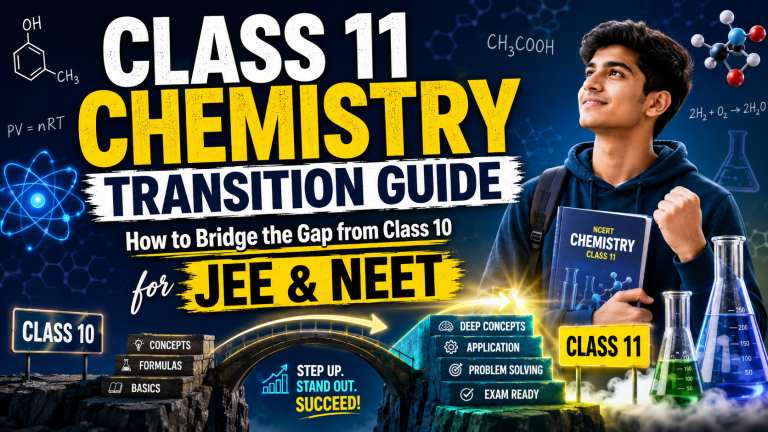
Every Class 10 student in West Bengal is on summer break right now. Most will drift through May and June and walk into Class 11 on the first day of school without any idea what’s coming. Then they spend the first month in shock, because Class 11 Physics and Maths are not a continuation of Class 10. They are a different experience entirely.
The students who settle into Class 11 quickly are almost always the ones who spent even two or three weeks in June building some context for what they were about to study. Not eight hours a day. Not intensive coaching. Just 45 minutes on most days, understanding what Class 11 covers before it officially begins.
For a student planning a Science stream with JEE or NEET in mind, that means developing some basic intuition for force and motion in Physics before the formal chapters arrive. It means shoring up any algebra weaknesses before they encounter calculus. It means reading something about biology that makes cell structure genuinely interesting, so that the Class 11 chapter doesn’t land cold.
At Jibon-O-Jeebika, our Class 11 foundation courses are built for exactly this window. Our teachers are researchers and domain professionals, not coaching institute instructors working from the same notes for the tenth year running. They teach the concepts that Class 11 will demand, in the way that JEE and NEET actually test them, starting from where a Madhyamik student currently stands.
Conclusion:
For the parents reading this: Your child has just crossed their first major academic milestone. The result of the anxiety they’ve carried for months doesn’t simply evaporate the moment the marks appear. Whether the score was a celebration or a disappointment, the emotional processing takes time. Let it.
The conversation about stream choices and summer plans is vital, but it doesn’t have to happen the moment the website loads the results. Give your child a quiet evening to breathe. Over the next few days, sit down together. Ask what they want to do. Listen before you advise.
At Jibon-O-Jeebika, we’ve observed that the families who navigate this transition most successfully are those where the parents approach the conversation with genuine curiosity rather than a fixed agenda. This decision ultimately belongs to the student; when they own their choice, they carry a level of motivation that no amount of pressure can replicate.
If you feel you need professional guidance or a neutral perspective to help navigate these life-shaping choices, you can always contact us to speak with our mentors.
Whatever that provisional marksheet says today, remember: this is the beginning of a journey, not the final word on your child’s potential. What they do with the next 60 days will shape their future far more than the number they woke up to this morning.
FAQs
1. My child didn’t get the marks they expected. Is it worth applying for PPS or PPR?
This really depends on how big the difference’s. If your child thinks they did a lot better than what the marksheet says, then PPS is an idea. PPS can help find mistakes when they add up the marks. On the hand, PPR is a more detailed check. You should know that sometimes the marks can stay the same or even go down. So your child should use PPR if they really think there is a difference between how hard they worked and the marks they got.
2. Can my child take Science if they scored low in Maths but high in Life Science?
Yes, it is possible. It will be tough. The subjects of Physics and Chemistry in class 11 need a lot of ideas. If your child has trouble with Maths that needs logic, but they love Biology, they can still take the PCB option. This means they can take Physics, Chemistry and Biology. At Jibon-O-Jeebika, we always tell students to work on their Algebra first. This is because you cannot avoid numbers if you want to study Science. Your child will need to be good at Maths if they want to do well in the Science stream. They should really think about how much they want to study Science and if they’re ready for the challenge.
3. Is the “PCMB” combination too much pressure for an average student?
To be honest, yes, it is. The PCMB combination is really tough because it needs you to balance two different big exams: the JEE, which is maths-based and the NEET, which is biology-based. Most students try to do both and end up not doing either. Unless your child is really motivated and cannot decide between engineering and medicine, it is usually better to focus on one thing and do it well.
4. What is the biggest difference between Class 10 and Class 11?
The biggest difference is like a jump. In Class 10, you can do well by memorising things and following a routine. In Class 11, the course material becomes three times bigger, and you need to really understand the concepts. Many students who did well in Class 10 feel really overwhelmed in the first few months of Class 11 because the way they used to study in Class 10 does not work anymore for PCMB and other Class 11 subjects.
5. Everyone says “Arts” has no future. Should I push my child toward Commerce instead?
That is an idea that is not true. If a student likes Law, Management, Civil Services, or Mass Communication Arts is a choice. Arts gives them a foundation rather than Science if they do not like Science. A student who does well in Arts will always have more chances than a student who just passes Science and loses confidence in themselves. Arts is an option, and my child should consider Arts if they like it. Arts has a lot to offer, and a student who does well in Arts will do well in life.